We use cookies to make your experience better. To comply with the new e-Privacy directive, we need to ask for your consent to set the cookies. Learn more.
Use Cases
Leveraging books datasets for market trend analysis in Publishing & Retail
on
January 16, 2026
Publishers and book retailers alike depend on accurate data to guide decisions. With the right ecommerce product datasets, it’s possible to align with reader preferences, optimize pricing strategies, and ensure the right titles reach the right shelves at the right time.
Sourced from public platforms and enriched through ethical web scraping and advanced analytics, these datasets provide visibility into metadata, pricing, formats, reader sentiment, sales velocity, availability, and more.
What are books datasets?
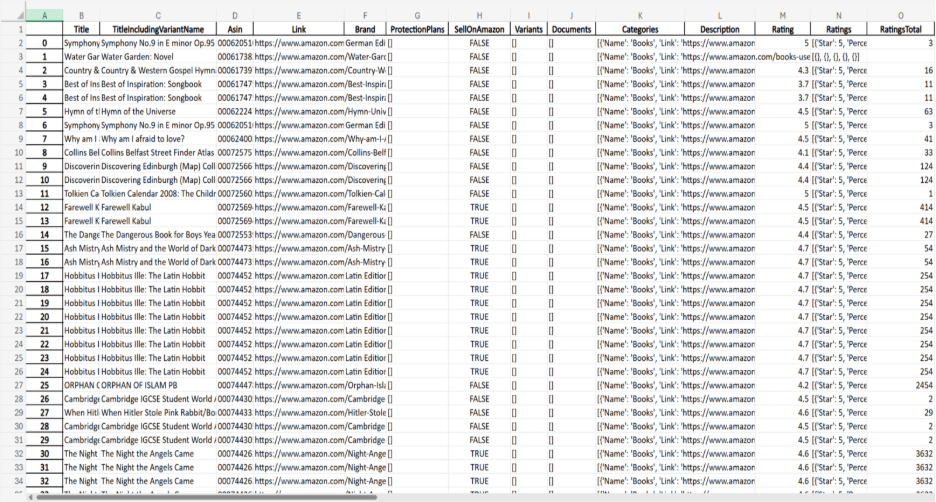
Book datasets are comprehensive, structured collections of information related to published books. They may include:
- Bibliographic metadata: title, author, publisher, genre, ISBN, edition
- Full or partial text for content analysis
- User-generated content: reviews, ratings, reading behavior
- Sales data: rankings, popularity indicators
- Visual assets: book covers and thumbnails
- Citation data: DOIs, references, and scholarly mentions
Depending on your needs, these datasets can be used for cataloging, machine learning, market analytics, AI training, or content personalization.
What are the main types of books datasets?
1. Bibliographic metadata
Includes foundational details like title, author, publisher, ISBN, publication date, genre, language, and format.
Example: Datasets.store Amazon Books dataset (a structured amazon books dataset for publishing and retail analytics)
2. Reviews and ratings
Aggregated reader sentiment data for:
- Recommender systems
- Sentiment analysis
- Trend tracking based on reader feedback
Sources: Goodreads, Amazon Reviews, including formats similar to an amazon book reviews dataset
3. Sales and popularity metrics
Reflect a book’s performance via:
- Weekly and monthly ranking history
- Bestseller designations
- Estimated sales velocity
4. Visual & Cover data
Book covers are essential for:
- Trend analysis in design aesthetics
- Machine learning for image recognition
- Branding and marketing alignment
5. Academic & Citation data
Especially valuable for scholarly publishers, including:
- Citation links
- DOIs and conference references
- Cross-publisher metadata
Sources: Semantic Scholar, OpenAlex
How do publishing companies use books datasets?
1. Identify bestselling genres, authors, and formats
Track the rise and fall of genres, discover high-performing authors, and analyze format preferences across markets.
Datasets.store aggregates this at scale—saving editorial teams weeks of manual research.
2. Analyze competitor pricing and release strategies
Compare pricing models, release windows, and bundling tactics used by competitors.
Automate competitor monitoring to refine your go-to-market approach.
3. Assess market viability for new authors and niches
Gauge reader appetite for new voices and themes by analyzing engagement, review volume, and sentiment.
Datasets.store helps identify hidden demand and untapped subcategories.
4. Deepen understanding of reader preferences
Analyze reviews to pinpoint loved and disliked tropes, favored pacing or tone, and unmet expectations.
Datasets.store equips marketers and editors to align product messaging with real audience needs.
How do retail book companies benefit from book datasets?
Book retailers — both online and brick-and-mortar—can extract enormous value from book datasets to enhance customer experience, streamline logistics, and drive conversion.
1. Optimize inventory and stock planning
- Track sales velocity and availability of comparable titles
- Predict restock needs based on seasonal or trend data
- Avoid overstocking and minimize stockouts with AI-powered demand forecasting
2. Improve search and recommendations
- Leverage genre, keyword, and sentiment analysis for personalized browsing
- Refine discovery and cross-sell logic using real-time reader behavior
3. Compete with smarter pricing and merchandising
- Benchmark pricing strategies across top competitors
- Apply dynamic pricing rules informed by real-time data
- Optimize promo calendars by aligning with market cycles
4. Localize for regional markets
- Analyze regional demand trends and cultural preferences
- Customize inventory and promotions to match local buying patterns
5. Empower buying teams with analytics
- Build dashboards to monitor performance by title, format, and author
- Integrate data with internal ERP or inventory management systems
Datasets.store: Datasets for Publishing & Retail
Datasets.store delivers high-quality books datasets for both publishing and retail sectors, including structured options for isbn database download and book isbn database download use cases.
Using structured data extraction from publicly available platforms like Amazon, Goodreads, Open Library, and others, we offer datasets that include:
- Product metadata (title, author, genre, ISBN)
- Pricing history and discount tracking
- Review and rating aggregation
- Stock levels, formats, and SKUs
- Multi-language and regional segmentation
- Structured exports for easy integration with your systems
Why choose Datasets.store?
- Time-saving: No more manual collection or formatting
- Trend foresight: Detect market movements early
- Automation-ready: Plug data directly into AI, dashboards, or forecasting tools
- Scalable intelligence: Serve global markets with multilingual data
- Strategic clarity: See what’s working—and what’s next
Explore more books datasets:
https://datasets.store/datasets/usa/amazon-com?dataset_top_category=247
Summing up: how can book datasets strengthen your strategy?
In both publishing and retail, book datasets are a strategic multiplier—empowering data-driven decisions across acquisition, pricing, marketing, inventory, and content development.
At Datasets.store, we provide ecommerce datasets, ready to be built into your AI and BI workflow. Whether you’re analyzing metadata, pricing trends, reviews, or stock levels across global markets, we can deliver the data infrastructure you need to grow — including book-focused datasets such as an amazon books dataset or amazon book reviews dataset for trend and sentiment analysis.
Ready to turn book data into business intelligence? Let’s explore how we can support your next chapter: Datasets.store
Related Datasets




Comments
Recent Posts