We use cookies to make your experience better. To comply with the new e-Privacy directive, we need to ask for your consent to set the cookies. Learn more.
Use Cases
Unlocking opportunities in the Toys & Games market with data
on
January 30, 2026
The toys and games industry is a massive and diverse market. It covers everything from children’s playthings and educational games to party supplies, kids’ electronics, arts and crafts, and more.
The audience is equally broad—kids, families, friends, hobby enthusiasts, and even adults looking for entertainment or unique collectibles.
These products reach consumers through various channels:
- Manufacturer brands like LEGO or Barbie
- Global retailers and resellers such as Walmart, Amazon, or Macy’s
- Local toy shops and specialized stores focusing on board games, hobbies, and crafts
- Party supply and costume rental shops, serving seasonal or event-driven demand
No matter the size of the business, they all share the same goal: to stay competitive, relevant, and profitable.
Why does data matter in the Toys & Games industry?
To achieve success, companies need more than intuition—they need data-driven insights. By leveraging ecommerce datasets, businesses can:
- Track competitors to understand pricing strategies, product launches, and promotions
- Spot trends early, such as the surge in popularity of L.O.L. Surprise! dolls or Labubu collectibles
- Make informed decisions quickly, ensuring they stock the right products at the right time
- Optimize sales strategies, from local shops adapting to neighborhood preferences to large resellers fine-tuning global offerings
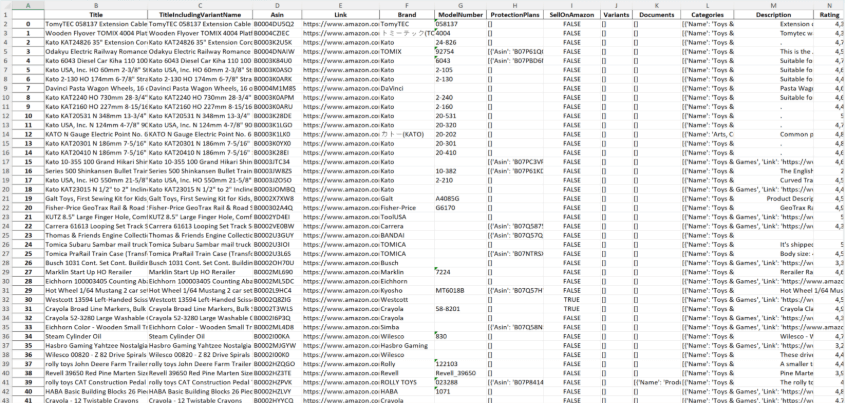
Using a structured retail product dataset or an ecommerce product dataset makes this process faster, scalable, and more reliable.
Where does Toys & Games data come from?
Valuable datasets can be collected from a variety of sources, including:
- International marketplaces like Amazon, eBay, or AliExpress
- Local online platforms and toy shops that reflect regional buying behavior
- Specialized stores and communities, such as board game retailers or niche hobby platforms
- Retail websites with publicly available product data, offering real-time insight into availability and pricing
For example, an Amazon toys database can be used to monitor assortment, pricing, and demand across hundreds of categories and subcategories.
What are the most valuable use cases for data in the Toys & Games industry?
1. How can businesses track product prices by region?
How it works:
Businesses can collect data on toy prices across different regions and marketplaces (e.g., Amazon US vs. Amazon UK, or Walmart vs. local toy shops).
Example in practice:
- A retailer sees that LEGO sets are priced significantly lower in one region compared to another
- They adjust their procurement strategy—sourcing from the cheaper region or negotiating better deals with distributors
- For ecommerce shops, this insight can help localize pricing, ensuring competitiveness without undercutting margins
Business impact:
- Stay competitive in each regional market
- Optimize profit margins
- Avoid losing sales due to price mismatch with competitors
2. How can businesses monitor new product launches and trends?
How it works:
Datasets track product listings and new arrivals on major marketplaces.
Example in practice:
- A toy retailer notices the rising number of listings for Labubu figurines on Amazon and Alibaba
- They recognize it as an emerging trend and quickly secure stock before demand peaks
- Simultaneously, they run a targeted marketing campaign (e.g., “Be the first to get Labubu in your city!”)
Business impact:
- Enter trending categories early
- Gain a competitive edge by being first to market
- Increase sales and customer engagement
3. How can competitive product tracking improve features, reviews, and ratings?
How it works:
Datasets collect details on competitors’ products—attributes, descriptions, reviews, ratings, and stock availability.
Example in practice:
- A board game manufacturer compares their product’s ratings to similar ones on Amazon
- They find that customers consistently mention “lack of clear instructions” in competitor reviews
- They improve their own packaging with clearer instructions and highlight this advantage in ads
Business impact:
- Improve product quality by learning from competitors’ weaknesses
- Enhance marketing messaging by showcasing unique selling points
- Build stronger customer satisfaction and loyalty
A structured board games list dataset can also support assortment planning and competitive analysis within specific board game categories.
4. How can seasonal demand prediction improve planning?
How it works:
Datasets reveal spikes in searches, listings, or purchases around certain periods (Halloween, Christmas, summer holidays).
Example in practice:
- A party supply shop uses data to predict demand for Halloween costumes
- They notice “Spider-Man costumes” growing faster than average
- The shop increases orders early to meet the surge, avoiding stock-outs during peak season
Business impact:
- Maximize sales during seasonal peaks
- Reduce the risk of overstocking or understocking
- Improve inventory planning and cash flow
5. How can data help optimize marketing campaigns?
How it works:
Datasets help identify which product categories are trending and what attributes matter most (e.g., “STEM toys,” “eco-friendly,” or “under $20”).
Example in practice:
- An online toy shop finds that STEM toys under $50 are trending among parents
- They run ads targeted at this niche: “Affordable STEM toys to boost your child’s creativity”
- Ads perform better because they align with real demand
Business impact:
- Higher return on ad spend
- Stronger customer engagement
- Better brand positioning as a trend-aware retailer
Why partner with Datasets.store for reliable Toys & Games data?
Getting access to this data doesn’t have to be complicated. By partnering with a reliable data provider like Datasets.store, businesses can stay ahead with ease.
- Ready-made datasets — Available directly, such as the Amazon toys and games dataset
- AI-ready & BI-ready design — Every ecommerce dataset is structured for advanced use cases:
- AI: powering demand forecasting, product recommendation systems, or automated sentiment analysis
- BI: feeding dashboards and analytics platforms to support data-driven strategy and reporting
Example in action:
A toy manufacturer used an Amazon toys and games dataset from Datasets.store to analyze seasonal trends and power a BI dashboard for product launch planning. At the same time, their AI team leveraged the same dataset to train a demand forecasting model, helping the company optimize stock levels ahead of peak holiday shopping periods.
With Datasets.store, you get more than raw data — you get datasets built for action, insight, and growth. If you’re looking to buy ecommerce datasets or buy ecommerce data for Toys & Games categories, ready-made datasets are the fastest way to start. You can also download ecommerce datasets samples to evaluate quality and structure before purchase.
For deeper segmentation, businesses can also build a kids toys product database or kids toys product dataset to track performance across specific toy categories.
Summary: How does data help you stay competitive in Toys & Games?
In the fast-moving world of toys and games, data is the key to staying competitive. Whether you are a global retailer, a local toy shop, or a specialized party supplier, the right datasets can help you track competitors, catch emerging trends, and grow your business.
Check the full list of datasets from the Toys & Games category today and unlock the power of reliable, custom-tailored data solutions.
Related Datasets
Comments
Recent Posts