We use cookies to make your experience better. To comply with the new e-Privacy directive, we need to ask for your consent to set the cookies. Learn more.

Use Cases
Tracking paws with data: Navigating the global Pet Supplies boom
on
February 03, 2026
For millions of people, pets aren’t just animals—they’re family. They offer unconditional love, reduce stress, and even improve mental health. It’s no surprise that more than half of households worldwide have at least one pet, with the highest ownership rates in countries like the U.S., Brazil, and parts of Europe.
This emotional bond between humans and pets has transformed the pet supplies industry into a multi-billion-dollar global market. Today, it’s not just about food and toys—it’s about lifestyle, wellness, sustainability, and even technology.
How is the pet supplies market expanding?
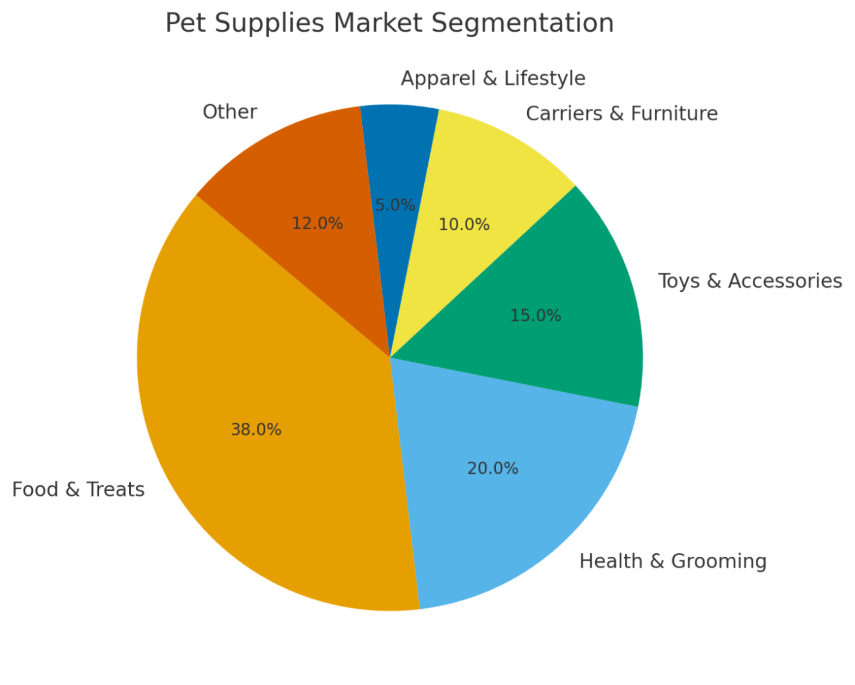
The pet economy is booming because owners increasingly treat pets like children—a trend often called the “pet humanization” movement. This shift drives demand in diverse categories:
- Nutrition: holistic, breed-specific, raw, freeze-dried, or vegan diets
- Healthcare: supplements, dental care, tele-vet consultations
- Fashion & Lifestyle: apparel, matching owner–pet accessories, pet strollers
- Technology: smart feeders, GPS collars, fitness trackers, AI-powered cameras
- Travel & Safety: airline-approved carriers, calming kits for anxious pets
- Sustainability: eco-plastic toys, plant-based litters, biodegradable waste bags
And these aren’t only for dogs and cats. Rabbits, birds, reptiles, and exotic animals are shaping niche segments, proving that the market is as diverse as the pets themselves.
Why is the pet supplies market becoming so competitive?
Pet ownership rates are climbing, but so is competition among brands. With hundreds of thousands of SKUs available globally, retailers and manufacturers face constant challenges:
- Differentiation in a saturated marketplace
- Meeting changing consumer expectations (e.g., health-focused or eco-conscious)
- Staying relevant by tracking emerging innovations
For businesses, relying on structured datasets—not intuition—has become essential. A structured pet supplies dataset (or multiple ecommerce datasets) can help teams benchmark competitors, track trends, and adapt faster.
Where does pet supply data come from?
Data sources span both global and local marketplaces:
- Ecommerce giants: Amazon, Alibaba, eBay
- Pet-focused platforms: Chewy, Zooplus, Petco
- Supermarkets & retailers: Walmart, Tesco, Carrefour
- Niche eco & wellness stores
- Direct-to-consumer startups disrupting traditional retail
The right dataset doesn’t just show what is selling—it also reveals why it’s selling, helping companies anticipate demand. For example, an Amazon pet supplies sales data feed can show fast shifts in pricing, demand, and bestseller rankings across categories.
What are the key use cases for pet supply datasets?
- Detecting nutritional trends
A U.K. startup discovered rising searches for “insect-based protein dog food” via scraped Amazon reviews. They launched an insect-protein treat line and became one of the first movers in Europe.
(This type of insight is often supported by a structured pet food database or pet nutrition dataset.)
- Brand reputation monitoring (Acana case)
Analysis of review sentiment flagged customer complaints about Acana’s declining quality. Competitors capitalized by launching campaigns highlighting “consistent quality,” stealing market share.
- Eco-friendly innovation
In Germany, datasets revealed a spike in “biodegradable cat litter” reviews. A supplier launched an organic litter line, securing contracts with major supermarket chains.
- Dynamic pricing strategies
By monitoring competitors on Alibaba and Amazon, a wholesaler adjusted pricing in near real time. They bundled best-selling carriers with accessories, boosting sales without lowering margins.
- Product development based on feedback
A U.S. furniture brand noticed consistent complaints about flimsy cat trees. They redesigned a sturdier, modular version and positioned it as an “eco-luxury” product—sales doubled within six months.
- Market entry intelligence
A Canadian pet toy brand wanted to expand into Asia. Dataset analysis showed Japanese owners preferred compact, multipurpose toys, while Korean consumers leaned toward “Instagrammable” accessories. This insight guided localized product launches.
(This can be supported by detailed pet accessories data and product attribute tracking.)
How do regional differences shape pet ownership trends?
- United States: 70% of households own pets, with dogs leading
- Europe: Cats dominate in countries like France and Germany, while Italy and Spain lean toward dogs
- Asia: Urbanization fuels smaller pet ownership (cats, birds, rabbits). Japan shows strong demand for luxury and tech-driven products
- Latin America: Brazil has one of the largest dog populations worldwide, driving high demand for food and accessories
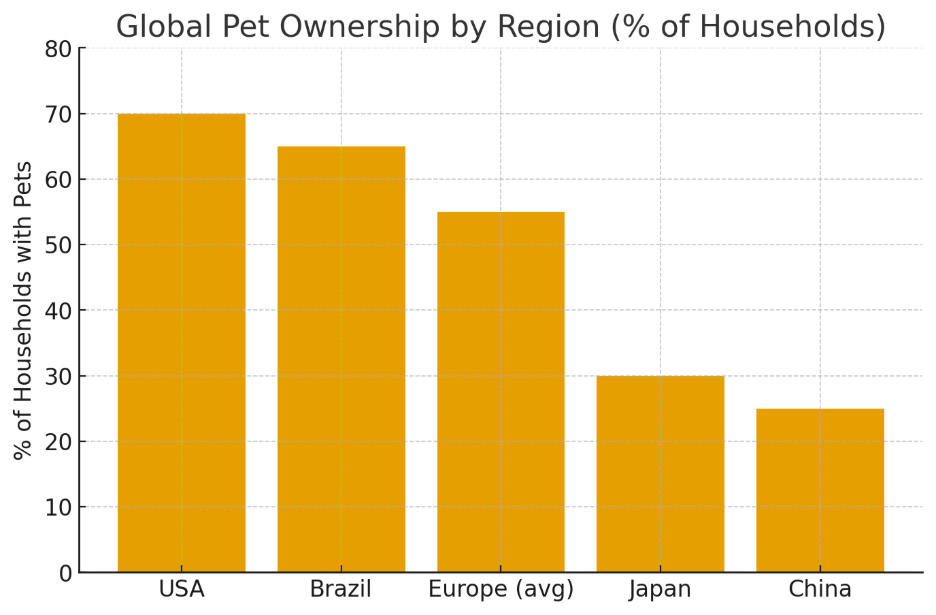
Understanding these regional nuances allows companies to tailor supply chains, marketing, and product portfolios.
What does digital transformation look like in pet retail?
Beyond physical products, the industry is embracing technology:
- Pet subscription boxes delivering curated items monthly
- Mobile apps for vet bookings, training, and nutrition tracking
- AR/VR tools letting customers virtually test pet furniture or accessories
- AI-powered sentiment analysis tracking reviews in real time
This creates opportunities for data-driven personalization at scale—supported by structured ecommerce dataset pipelines and modern analytics tools.
What is Datasets.store’s role in pet supply data?
At Datasets.store, we help businesses make data-driven decisions with AI- and BI-ready datasets sourced from publicly available platforms.
Datasets.store offers:
- Ready-made datasets for ecommerce market analysis
- Flexible delivery formats (CSV, Parquet)
- Multiple update frequency options (monthly, quarterly, bi-annual)
- High accuracy — cleaned and structured for direct integration into analytics pipelines
For Amazon-focused analysis, teams can use ready-made options such as Amazon pet supplies sales data or an Amazon pet accessories database to monitor products, prices, and demand at scale.
What are the key advantages of datasets from Datasets.store?
- Scalable — suitable for both startups and large enterprises
- Future-ready — supports continuous monitoring of innovation and consumer behavior
- Comprehensive — includes pricing, product attributes, reviews, and market trends
- Strategic advantage — enables confident, data-driven decision-making
Explore all available Pet Supplies datasets. If you want to download ecommerce datasets samples to evaluate them before purchase, sample files are available for review.
Summing it up: why do datasets matter in the pet supplies market?
With over half of families worldwide owning pets, the market will only expand further. Pet suppliers that understand consumer psychology, regional differences, and technological trends are the ones who will thrive.
And in this ever-changing environment, datasets are the compass—guiding companies through competitor landscapes, shifting trends, and customer expectations.
Datasets.store makes sure you don’t just keep up with the market—you stay ahead of it.
Related Datasets




Comments
Recent Posts