We use cookies to make your experience better. To comply with the new e-Privacy directive, we need to ask for your consent to set the cookies. Learn more.
Use Cases
The Baby Products market: How data can drive smarter decisions
on
January 20, 2026
Do you know how many babies are born every day?
On average, around 385,000 babies are born daily worldwide, according to estimates from the United Nations and the World Health Organization.
That’s roughly 2.7 million every week and more than 10.7 million every month.
It’s fair to say — the baby products market is enormous, constantly fueled by a never-ending stream of new customers.
Why is this an industry of endless brands and innovation?
Did you know how many stroller brands exist worldwide? Hundreds! Some are positioned as the “iPhones of strollers” — sleek, premium, and trendsetting — like Cybex, Bugaboo, or UPPAbaby.
If your company operates in this market, you already know how important it is to keep up with the latest trends, consumer preferences, and innovations to stay competitive.
What is the role of data in staying ahead?
How do you achieve this? By analyzing competitors, tracking product types, and monitoring market share — all guided by real-world, up-to-date data rather than guesswork.
The most efficient way to do this is by using high-quality, comprehensive ecommerce datasets. A structured ecommerce product dataset gives teams a reliable foundation for analysis, automation, and decision-making.
What can be included in a Baby Products dataset?
A well-structured Retail product dataset can contain:
- Product names, SKUs, and detailed specifications
- Pricing for different product categories and price segments
- Availability and stock levels
- Customer ratings and reviews
- Product images and descriptions
- Brand and model launch dates
- Sales rank and popularity trends
- Category-level market share data
This type of ecommerce dataset helps businesses monitor performance across regions, categories, and price tiers.
What are the main sources of Baby Product data?
Datasets can be built from international marketplaces or local retail platforms depending on your target market.
Global examples:
- Amazon – vast baby product selection with reviews and ratings
- eBay – both new and second-hand items
- AliExpress – popular for affordable products and sourcing trends
- Walmart – mainstream retail data for the US market
Local examples:
- Mothercare – UK-based retailer with baby gear and apparel
- Baby Bunting – Australian baby products retailer
- FirstCry – India’s largest online baby store
For companies focused on Amazon specifically, an Amazon baby category dataset or Amazon infant products dataset can be especially valuable for tracking assortment and pricing changes at scale.
What are the key use cases for Baby Product datasets?
1. Tracking product popularity
Identify best-sellers by region and segment.
Example: Stokke dominates the premium stroller category in Europe, while budget-friendly models from Babyhug lead in Southeast Asia.
2. Sentiment analysis
Spot recurring praise or complaints in reviews.
Example: Parents love the sleek design of Brand X strollers but often complain about their weight — valuable insight for product improvement.
3. Market dynamics monitoring
Understand how demand evolves.
Example: A sudden spike in searches for eco-friendly diapers in the U.S. signals a trend shift towards sustainability.
4. Competitor pricing analysis
Compare regional pricing strategies.
Example: Competitor Y sells a car seat €20 cheaper in Germany but €15 more expensive in France — an opportunity to adjust your pricing.
5. Innovation tracking
Identify emerging product categories before they go mainstream:
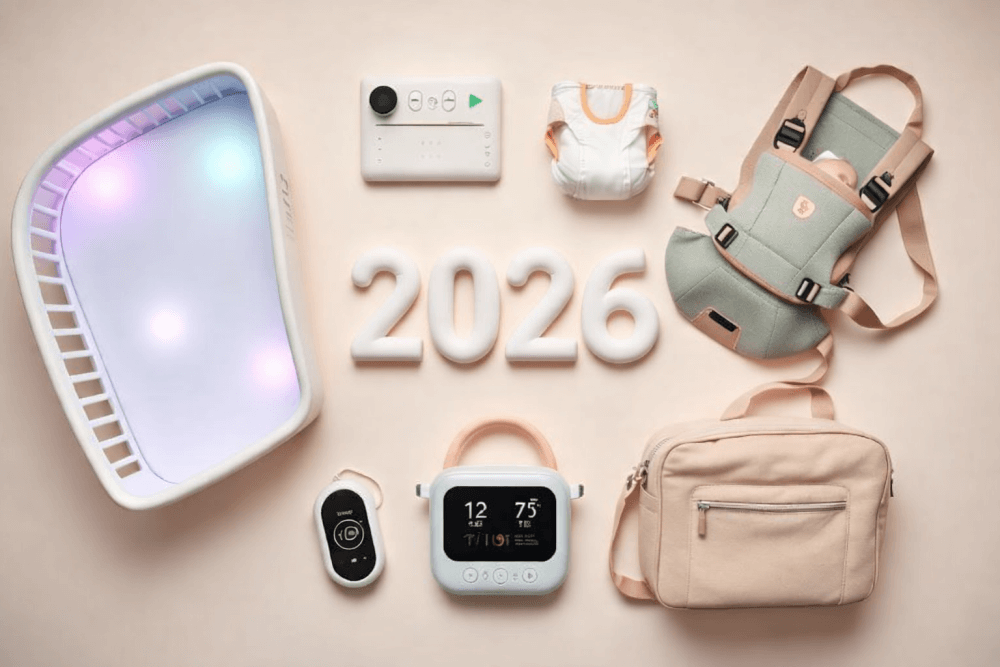
- Ergonomic baby carriers
- Convertible, space-saving cribs
- Eco-friendly strollers made from recycled materials
- AI-powered baby monitors
6. Strategic decision-making
- Gap analysis: Spot underserved product categories
- Launch readiness: Validate new product demand before investing
- Seasonal forecasting: Predict spikes for outdoor gear in summer or warm apparel in winter
Why use Datasets.store for Baby Products data?
At Datasets.store, we offer ready-to-use ecommerce datasets tailored specifically for the baby products market. If you’re looking to buy ecommerce datasets or buy ecommerce data that is structured and reliable, our platform provides flexible options for analytics teams and business users.
What sets our datasets apart
- AI-ready: Structured for machine learning workflows, enabling predictive analytics, demand forecasting, and sentiment classification.
- BI-ready: Easy to integrate into business intelligence tools, powering dashboards and actionable insights for faster decision-making.
From pricing and availability to market share dynamics and consumer sentiment, our datasets help businesses move from information → insight → action.
Explore more: Amazon Baby Products datasets
Choose the dataset category or subcategory that fits your needs, along with your preferred delivery format and update frequency. You can also download a sample dataset to confirm it matches your requirements before purchasing. If you’re looking to download ecommerce datasets for evaluation, samples are available directly on the platform.
In conclusion, how can data help you win in the baby products market?
The baby products industry is huge, fast-moving, and highly competitive.
To win in this market, you need reliable, structured, and up-to-date data that helps you understand customer needs, spot opportunities, and respond faster than competitors.
With Datasets.store dataset solutions, you can turn information into action — and action into results.
Related Datasets
Comments
Recent Posts